1. AI Overviews, how to adapt your content strategy without guessing

    AI Overviews, how to adapt your content strategy without guessing

    AI Overviews are changing what it means to be visible in Google. Sometimes they reduce clicks by answering questions directly in the SERP. Other times they surface sources that aren’t even in the classic top positions, especially when the page is highly structured and directly answers the query. That means your strategy needs to evolve, your goal is no longer only to rank, but to become the most extractable, trustworthy, and useful reference on the topic.

    Start with the AI Content Tool

    This shift rewards content that is clear, structured, and complete. You’ll increasingly win by producing pages that make it easy for Google, and AI systems, to understand exactly what your page covers and why it’s helpful. With Rank Monitor, you can improve content faster using AI-driven analysis and recommendations. Start with the AI Content Tool.

    ai tools

    What content looks like when it performs in AI-driven SERPs

    AI Overviews tend to pull from pages that deliver a fast, accurate answer, then support it with deeper explanation. This pushes you toward content that is cleanly organized and easy to scan, because AI systems depend heavily on structure to interpret meaning.

    Content elements that typically perform better include,

    • Clear headings, that reflect real questions and subtopics

    • Concise answer-first sections, where the main takeaway appears early

    • Step-by-step explanations, that remove ambiguity and support practical intent

    • FAQ-style blocks, that cover variations of the same question

    • Strong internal linking, that reinforces topical authority across your site

    A practical workflow to reduce guesswork

    To adapt without guessing, you need a repeatable process. Pick a theme you want to own, build a pillar page that fully covers it, then publish supporting pages that address sub-questions. Connect everything with internal links, and continuously improve coverage based on what the SERP rewards.

    A simple workflow that works well is,

    • Choose a topic cluster, based on business value and proven demand

    • Build one pillar page, designed to be the best single reference on the topic

    • Create supporting pages, targeting subtopics and specific intent variations

    • Use AI tools to improve completeness, structure, and missing sections

    • Track topic visibility, using Share of Voice to confirm real growth over time

  2. Share of voice explained, how to measure real SEO growth

    Share of voice explained, how to measure real SEO growth

    Share of voice, often shortened to SOV, is one of the most reliable ways to measure SEO growth. Not because it sounds impressive, but because it goes beyond individual keyword rankings. Instead of celebrating a few isolated wins, you measure how much overall visibility your website captures across an entire set of tracked search terms. That gives you a clearer view of whether you’re actually gaining market share, or simply moving around on a handful of keywords.

    Share of Voice reflects your potential

    In simple terms, Share of Voice reflects your share of potential clicks and attention within a topic. When your pages move from positions 8 to 3 across multiple keywords, your overall visibility grows, even if a few individual rankings fluctuate. This is exactly why SOV is so valuable for reporting, it provides a stable, strategic view rather than a collection of isolated data points. If you want to see how this works inside Rank Monitor, explore the feature page here, Share of Voice.

    Share of voice seo companies

    What SOV captures that rankings often miss

    Rankings alone don’t tell the full story. You can rank for hundreds of keywords and still struggle to drive meaningful traffic if you’re not consistently visible on the results page. SOV helps you connect rankings to impact, because it highlights where your site is truly present, not just technically “ranking.”

    Key reasons to track Share of Voice include,

    • A single number to represent SEO visibility, across your entire keyword set

    • A stronger foundation for reporting, especially when comparing periods or competitors

    • Better prioritization, because it reveals which topics need improvement first

    • A clearer view of competitive shifts, when another site begins to dominate a theme

    How to improve SOV inside Rank Monitor

    Once you track SOV, your next step is to turn visibility data into action. Your fastest growth typically comes from keywords where you’re already close, positions 4 to 10 are often the easiest wins, because small improvements can push you into the most-clicked spots.

    High-impact actions that tend to lift SOV include,

    • Expanding content depth, by covering missing subtopics and questions

    • Improving internal linking, so Google understands page importance and topical structure

    • Optimizing SERP elements, such as titles, meta descriptions, and clear headings

    • Refreshing pages that are slipping, before competitors take more share

  3. Content gap analysis, how to find topics your competitors already own

    How to find topics your competitors already own

    A content gap analysis helps you uncover content opportunities based on evidence rather than assumptions. The core idea is simple, your competitors rank for topics and keywords that you don’t currently cover well, or don’t cover at all. When you identify these gaps, you can build a content plan that targets proven demand, and expand into topics that already drive traffic in your niche.

    Search Console with content analysis tools

    The most powerful part is that content gap analysis isn’t just about “stealing” keywords. It’s about understanding why competitors win, and then creating something more helpful, more complete, and better aligned with search intent. You can accelerate this workflow by combining your own data from Google Search Console with content analysis tools, and by using AI to structure content and identify missing coverage. If you want help generating better content structure and coverage faster, take a look at the Rank Monitor AI Content Tool, https://rankmonitor.com/features/ai/ai-content-tool/.

    ai content growth

    Where the best gap insights come from

    Your own data should always be your starting point. Search Console shows what Google already associates with your site, including queries where you get impressions but rank too low to earn clicks. From there, you compare that footprint against competitor topics to find gaps worth prioritizing.

    Good sources for content gap insights include,

    • Google Search Console, for queries you appear for but underperform on

    • Existing landing pages and blog content, to spot thin coverage or missing intent

    • Competitor pages that rank consistently, especially those dominating topic clusters

    • SERP patterns, such as “how-to”, “pricing”, “comparison”, “best”, and “near me” intents

    How to turn gaps into a simple, repeatable plan

    Once you have your gap list, the key is to organize it into something actionable. The fastest results usually come from improving content that already exists, then expanding high-performing pages, and only after that building entirely new pages where you have no coverage.

    A practical way to prioritize content gaps is,

    • Quick wins, pages that rank on page 2 and only need better completeness or structure

    • Expansions, strong pages that need additional sections, FAQs, or deeper subtopic coverage

    • New pages, missing topics that deserve a dedicated page because intent is unique

    • Competitive takeovers, topics where competitors rank with weak content you can beat

  4. Local SEO, why do you need this?

    What is local SEO?

    Local SEO (local search engine optimization) is the process of optimizing a business’s online presence to increase visibility in local search results. It helps businesses attract more customers from relevant local searches on Google and other search engines. Any business with a physical location or serving a specific geographic area can benefit from a strong local SEO strategy.

    For example, if a user searches for “best coffee shop near me,” Google will prioritize businesses that are geographically close, have a strong online reputation, and have an optimized Google My Business SEO profile.

    Why local SEO is important

    Local SEO is crucial because a significant portion of searches are local. According to Google:

    • 30% of all mobile searches are related to location.
    • 78% of people who search for something nearby visit the business within a day.
    • 28% of local searches result in a purchase.

    Businesses that do not implement a local SEO strategy miss out on significant opportunities to attract customers. Investing in local search engine optimisation ensures your business appears at the top of search results when potential customers look for products or services you offer.

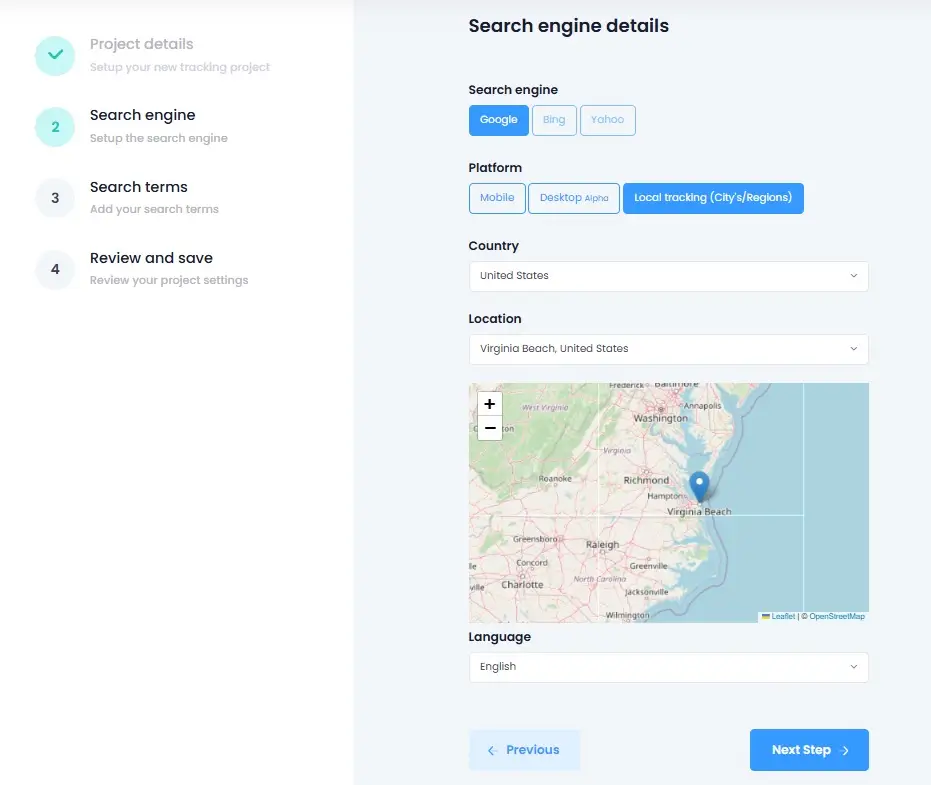
    setting up project

    How local SEO works

    Google uses two primary types of results for local searches:

    1. Local pack results – A map featuring local businesses relevant to the user’s search.
    2. Organic search results – Traditional blue link listings ranked based on SEO factors.

    A successful local SEO optimization strategy aims to rank high in both the local pack and organic search results, increasing the chances of attracting local customers.

    Best local SEO strategies for 2024/2025

    1. Optimize your Google Business Profile

    A Google Business Profile (formerly Google My Business) is essential for appearing in Google’s local pack and Maps. Google prioritizes businesses with accurate and complete profiles.

    Best practices:

    • Choose the correct business category.
    • Ensure NAP (name, address, phone number) consistency.
    • Upload high-quality photos regularly.
    • Collect and respond to customer reviews.
    • Keep business hours updated, including holiday hours.

    2. Get more customer reviews

    Reviews are a major local SEO ranking factor. Positive reviews improve credibility and increase the likelihood of ranking higher in Google local search.

    How to get more reviews:

    • Ask satisfied customers to leave reviews on Google.
    • Respond to all reviews, both positive and negative.
    • Share direct review links in emails and on social media.
    • Avoid offering incentives for reviews, as it violates Google’s policies.

    3. Conduct local keyword research

    Local SEO analysis starts with identifying the right keywords. Using the right local SEO tools, businesses can find high-traffic search terms related to their services and location.

    Steps for keyword research:

    • Identify service-based keywords (e.g., “emergency plumber in Chicago”).
    • Check search volumes with local SEO software.
    • Analyze competitors’ top-ranking pages.
    • Optimize pages with location-specific terms.

    4. Build local citations and backlinks

    Citations mention your business’s NAP on directories and social media. Consistent citations help with local search optimization.

    Where to list your business:

    • Yelp
    • Facebook
    • Apple Maps
    • Bing Places
    • Local industry directories

    Backlinks from authoritative local websites improve local search engine rankings. Building relationships with local bloggers and news sites can help acquire valuable backlinks.

    5. Optimize on-page SEO

    A well-structured website improves SEO for local businesses.

    Best practices:

    • Include location-based keywords in title tags and content.
    • Add structured data markup for local businesses.
    • Ensure fast page loading speeds and mobile responsiveness.
    • Internally link relevant pages to enhance website navigation.

    How Rank Monitor helps with local SEO

    Managing local SEO strategies can be overwhelming. Rank Monitor simplifies local business SEO by providing powerful local SEO solutions.

    With Rank Monitor, you can:

    • Track local rankings with real-time local SEO analysis.
    • Monitor and optimize Google My Business SEO.
    • Identify local SEO ranking factors affecting your business.
    • Generate in-depth local SEO reports.
    • Automate keyword tracking with the best local SEO tools.

    Whether you’re looking for local SEO services, local SEO software, or advanced local search marketing solutions, Rank Monitor helps businesses dominate local search results.

    Let’s go Local, with SEO!

    Local search SEO is no longer optional for businesses that want to attract local customers. Implementing a strong local SEO marketing strategy ensures increased visibility, higher website traffic, and improved conversions.

    By leveraging tools like Rank Monitor, businesses can stay ahead of competitors and dominate Google local SEO rankings.

    setting up project